

Share your stroke recovery journey through a guest posting service designed specifically for survivors like you. Your story holds immense power—not just for your own healing, but for thousands navigating similar challenges who desperately need to know they’re not alone.
Transform your experience into published articles on reputable health platforms that reach communities actively seeking guidance, hope, and practical wisdom. Professional guest posting services handle the technical aspects—finding appropriate websites, formatting your content, and managing submissions—while you focus on what matters most: telling your truth in your own words.
Connect with editors who understand the unique needs of stroke survivors and recognize the therapeutic value of sharing recovery milestones, setbacks, and breakthroughs. These services bridge the gap between your powerful personal narrative and audiences who need exactly what you have to offer: authentic insight into rebuilding life after stroke.
Build meaningful relationships within the survivor community while establishing yourself as a voice of encouragement and practical support. Whether you’re six months or six years into recovery, your perspective matters. Guest posting removes barriers that might otherwise keep your story private, giving you a platform to inspire others while processing your own journey through purposeful writing. This isn’t just about visibility—it’s about creating lasting impact through shared human experience.
What Guest Posting Means for the Stroke Community

The Reach Your Story Can Have
When you share your stroke recovery story through guest posting on established health platforms, you’re doing something truly powerful—you’re reaching people at their most vulnerable moments. These platforms attract thousands of visitors every month: newly diagnosed survivors searching frantically for hope, family members trying to understand what comes next, and caregivers looking for practical guidance they can trust.
Your words land exactly where they’re needed most. Someone might read your story about regaining speech ability at 2 a.m., unable to sleep after their loved one’s diagnosis. Another reader might find courage in your account of adapting to physical challenges, realizing they’re not alone in their struggles. Reputable health websites already have the attention of your target audience—people actively seeking the exact insights and encouragement you can offer.
The beauty of these platforms is their credibility. When your story appears alongside trusted medical resources, it carries weight. Readers know they’ve found a reliable space where real experiences meet professional guidance, creating the perfect environment for your message to inspire meaningful change and foster genuine connection.
Building Trust Through Shared Experience
When you share your recovery journey on a personal blog, it reaches friends and family who already care about you. But when your story appears on an established health platform through a guest posting service, something powerful happens—it reaches thousands of people navigating similar challenges who desperately need to hear they’re not alone.
Credible health websites have spent years building trust with their audiences. When they publish your survivor story, they’re essentially vouching for you, lending their reputation to amplify your voice. Readers instinctively place more confidence in content that’s been reviewed and approved by reputable organizations than in standalone personal blogs.
This validation matters deeply for stroke survivors seeking hope and practical guidance. Your experience carries authority because it’s featured alongside expert medical advice and evidence-based resources. Fellow survivors discover your story while researching treatment options or coping strategies, making the connection feel serendipitous rather than coincidental.
The power of community grows exponentially when stories live on platforms designed for engagement. Readers can comment, share their own experiences, and connect with you directly. This creates a ripple effect—your courage to share inspires others to open up, building a supportive network where vulnerability becomes strength and isolated struggles transform into collective healing.
How Health Guest Posting Services Work (Without the Confusion)
Finding the Right Platforms for Your Message
A quality guest posting service acts as your personal matchmaker, connecting your unique recovery journey with platforms where it will truly resonate. These services understand that your stroke survival story belongs in spaces dedicated to neurological recovery, cardiovascular health, and holistic wellness—not just anywhere that accepts content.
The right service takes time to understand your experience and goals before recommending platforms. They look for health websites with engaged communities of stroke survivors, heart disease patients, and caregivers who will genuinely benefit from your insights. This targeted approach means your story reaches people actively seeking hope, practical tips, and connection during their own recovery journey.
Professional services maintain relationships with reputable health blogs, medical foundations, rehabilitation resources, and wellness communities that welcome survivor perspectives. They ensure these platforms have good standing, authentic readership, and alignment with your message. Rather than scattering your story across random sites, they strategically place it where it creates meaningful impact—helping fellow survivors while establishing your voice within the recovery community. This careful matching process transforms guest posting from simple content placement into purposeful connection-building.
From Your Experience to Published Article
Your story matters, and transforming it into a published article is easier than you might think. The process begins with a simple conversation—you share your experience in your own words, whether through a phone call, video chat, or written notes. There’s no pressure to be a professional writer; you just need to be yourself.
A skilled editor will work alongside you, helping organize your thoughts while keeping your authentic voice at the center. They’ll ask gentle questions to draw out meaningful details and clarify points that readers might find helpful. Think of them as a guide, not a ghostwriter—your personality and perspective remain intact throughout.
The editorial team handles the technical aspects: checking grammar, suggesting structure improvements, and ensuring your article meets publication standards. They’ll also explain any medical terms in accessible language and verify facts with sensitivity. Before anything goes live, you’ll review and approve the final version, making sure it truly represents your journey.
This collaborative approach means you focus on what you do best—sharing your real, lived experience—while professionals handle the publishing details. The result is a polished article that sounds like you and reaches people who need to hear your message of hope and resilience.

What to Expect in Terms of Time and Effort
Understanding what’s involved can help ease any concerns you might have. Most health guest posting services are designed with your recovery in mind. Typically, you’ll spend just 30-60 minutes sharing your story through a phone call, video chat, or written notes—whatever feels most comfortable for you.
The service then takes your story and crafts it into a polished article, which usually takes 1-2 weeks. You’ll receive a draft to review, and this is where your involvement matters most. You might need another 20-30 minutes to read through and suggest any changes. Most services offer at least one round of revisions to ensure your story feels authentically yours.
The beauty of working with professionals is that they handle the technical aspects—finding suitable websites, managing submissions, and navigating editorial requirements. You focus solely on your story and comfort level.
If you’re having a challenging recovery day, communicate that. Reputable services understand that your healing comes first and will adjust timelines accordingly. Many survivors find the process energizing rather than draining, as it offers a meaningful way to turn their experience into hope for others. This isn’t about adding stress to your life; it’s about creating something positive when you have the energy to do so.
The Healing Power of Sharing Your Stroke Journey
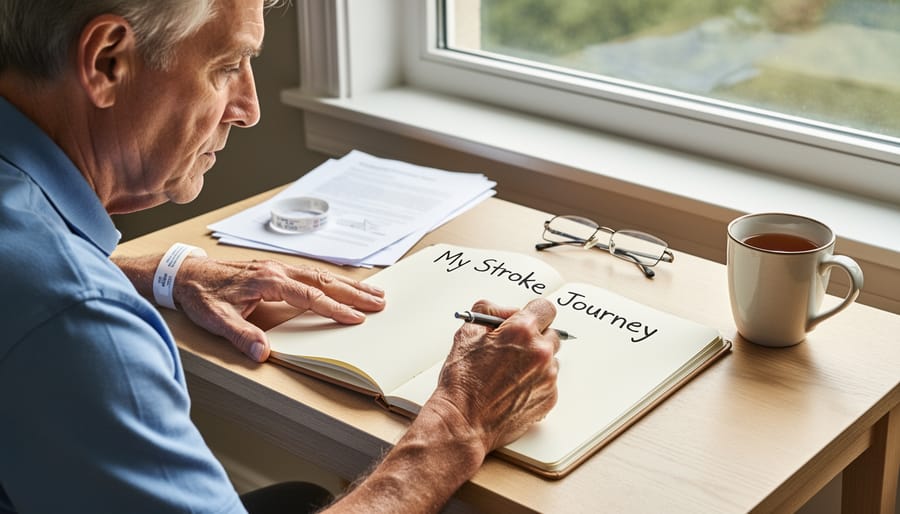
Processing Your Experience Through Writing
Writing about your stroke experience offers more than just sharing information—it becomes a powerful tool for healing. When you organize your thoughts for publication, you’re creating a narrative that helps you make sense of what happened. This process of reflection and articulation plays a meaningful role in emotional recovery.
Many survivors find that writing their stories helps them identify personal growth they hadn’t fully recognized. You might discover resilience you didn’t know you possessed or notice how far you’ve come in your recovery journey. Putting words to your experience can transform overwhelming emotions into something tangible and manageable.
The act of crafting your story for others also creates purpose from adversity. When you share what you’ve learned—whether it’s a coping strategy that worked, a moment of breakthrough, or simply your honest journey—you’re offering hope and practical wisdom to others facing similar challenges.
Guest posting doesn’t require perfect prose or professional writing skills. What matters is authenticity and the willingness to share. The structure of preparing your thoughts for publication naturally helps you process complex feelings, celebrate victories, and acknowledge difficulties without judgment. Your story, told in your own words, becomes both a healing exercise for you and a beacon of possibility for others walking this path.
The Connections That Come Back to You
One of the most rewarding aspects of sharing your story through guest posting is the unexpected connections that follow. Published survivors consistently report receiving heartfelt messages from readers who felt less alone after reading their words. These aren’t just casual comments—they’re meaningful exchanges that can become sources of strength and friendship.
Imagine receiving an email from someone across the country who’s facing similar challenges, thanking you for putting into words what they couldn’t express. Or connecting with a caregiver who shares your article with their loved one, sparking a breakthrough in their communication. These moments remind you that your recovery journey has value beyond your own experience.
Many survivors find that these connections provide a renewed sense of purpose during difficult days. When progress feels slow, knowing your words have helped someone else can be incredibly motivating. Some published authors even develop ongoing correspondence with readers, forming support networks that benefit everyone involved.
This ripple effect extends beyond individual messages. Your story might inspire healthcare professionals to adjust their approach, influence support group discussions, or give families hope when they need it most. The connections that come back to you become part of your healing, transforming personal struggle into collective strength.
What Makes a Stroke Recovery Story Worth Publishing
The Moments That Changed Everything
Recovery rarely follows a straight line. Many survivors describe their journey as a series of pivotal moments that reshaped their understanding of what was possible. These breakthroughs often come unexpectedly and serve as powerful reminders that progress takes many forms.
For some, the turning point arrives when they first speak a complete sentence after months of speech therapy, or when they take those initial unassisted steps down the hospital corridor. Others remember the day they could button their shirt independently or recall their grandchild’s name without hesitation. These victories might seem small to outsiders, but they represent monumental shifts in confidence and capability.
The challenges are equally transformative. Confronting the reality of physical limitations, navigating the frustration of cognitive changes, or accepting help from loved ones can feel overwhelming. Yet these difficult moments often become catalysts for growth. Many survivors report that hitting rock bottom emotionally forced them to seek support groups, try new therapies, or finally prioritize stroke prevention strategies they’d previously ignored.
Sharing these experiences through guest posting creates a powerful ripple effect. When one survivor describes their breakthrough moment, another recognizes their own potential. When someone honestly discusses their setbacks, others feel less alone in their struggles. These shared stories become guideposts for the entire community, illuminating pathways through the darkness and celebrating the resilience that defines stroke recovery.
Practical Wisdom Only Experience Can Teach
Medical textbooks tell you about stroke recovery in clinical terms, but they rarely capture the clever workarounds and small discoveries that make daily life easier. Stroke survivors who share their experiences through guest posting often reveal these practical gems that only come from living through recovery firsthand.
For instance, many survivors discover that fatigue hits differently than exhaustion—it’s a full-body shutdown that demands immediate rest, not something you can push through. They learn which times of day their energy peaks and schedule important tasks accordingly. Others find that keeping a “brain fog journal” helps them identify patterns in their cognitive clarity, allowing them to plan around their best mental hours.
Communication becomes an art form in new ways. Some survivors develop personal signals with family members for when words won’t come—a specific gesture for “I need a moment” or “help me find this word.” They discover that writing key points before phone calls reduces anxiety, or that video calls work better than voice-only because facial expressions fill communication gaps.
The adaptive strategies survivors create are endlessly inventive: labeling cupboards with pictures and words, setting phone alarms for medication with specific ringtones, or using bright tape to mark step edges. These aren’t solutions any handbook suggested—they emerged from trial, error, and the determination to reclaim independence.
When survivors share these real-world discoveries through guest posts, they create a practical wisdom library that helps others avoid reinventing solutions that already exist within the community.
Choosing a Guest Posting Service That Respects Your Story
Questions to Ask Before You Commit
Before partnering with any guest posting service, protect yourself by asking these important questions. Start with their editorial process: “How do you handle sensitive health information?” and “Will my story be fact-checked by someone with medical knowledge?” Understanding their review process ensures your experience is shared accurately and safely.
Ask about platform vetting: “What types of websites will feature my story?” and “Can I review and approve the platforms before publication?” A trustworthy service will show you exactly where your voice will be heard and never place your content on questionable sites.
Content ownership matters deeply. Clarify: “Will I retain rights to my story?” and “Can I republish my content elsewhere?” Your journey belongs to you, and reputable services respect that completely.
Finally, inquire about support throughout the process: “Will someone help me refine my story?” and “What happens if I’m uncomfortable with edits?” The best services offer compassionate guidance, walking alongside you from first draft to publication. They understand that sharing your stroke experience takes courage and deserve a partner who honors that bravery with transparency, patience, and genuine care for your wellbeing.
Red Flags That Signal the Wrong Fit
Not every service has your best interests at heart. Some warning signs should make you pause before sharing your story. Be cautious if a service promises guaranteed placements on dozens of websites without first understanding your journey. Your experience deserves thoughtful placement, not a numbers game.
Watch out for services that show little interest in your actual story. If they only want keyword-stuffed content or focus solely on search engine rankings rather than authentic storytelling, they’re missing the point entirely. Your narrative should inspire and connect with real people, not just algorithms.
Red flags include services offering placements on websites completely unrelated to health, recovery, or caregiving. Your stroke survival story belongs in spaces where it can genuinely help others walking similar paths, not on random blogs about unrelated topics.
Be wary of anyone who discourages your editorial input or rushes you through the writing process. Quality services understand that your story needs time to develop and should encourage your involvement throughout. Similarly, avoid services that can’t provide examples of previous work or client testimonials.
If something feels off or the service seems more interested in quick profits than meaningful storytelling, trust your instincts. The right partner will respect your journey and prioritize authentic connection over shortcuts.
Your recovery journey is unique, and so is the wisdom you’ve gained along the way. Sharing your story through guest posting isn’t just about helping others navigate their own stroke recovery—it’s also a powerful way to honor how far you’ve come. When you put your experiences into words, you’re creating something meaningful that extends beyond your personal healing, building bridges to others who need hope and practical guidance.
Consider this: the insights that seem ordinary to you might be exactly what someone else needs to hear today. Maybe it’s how you adapted your kitchen to manage with limited mobility, or the breakthrough moment when you first regained speech. These real-world details matter deeply to people walking a similar path.
Guest posting also offers you a chance for personal growth. Many survivors find that writing about their experiences helps them process emotions, recognize their progress, and connect with a supportive community that truly understands. It transforms isolated struggles into shared strength.
You don’t need to be a professional writer or have all the answers. Your authentic voice and lived experience are enough. Health guest posting services exist specifically to support you through this process, handling the technical aspects while you focus on what you know best—your story.
If you’ve been thinking about sharing your journey, now is the time. Your experience matters, your voice deserves to be heard, and there’s a community waiting to benefit from your courage and resilience.


