
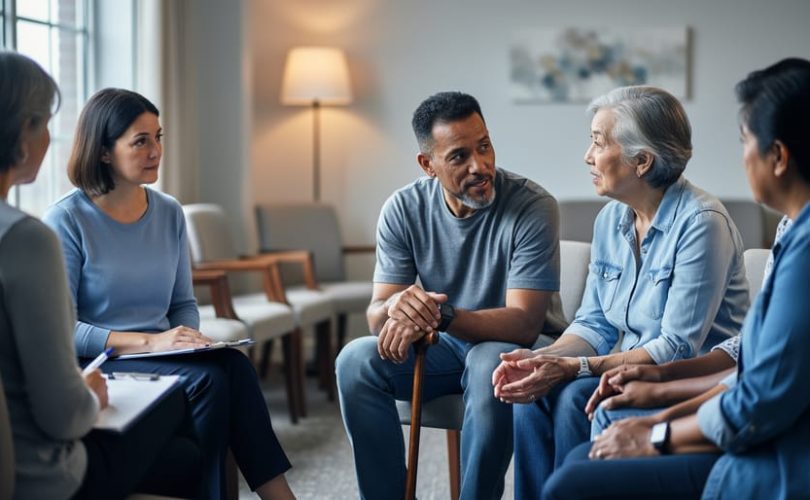
Recovery from stroke or heart disease doesn’t happen in isolation. You need people who truly understand what you’re going through, not just sympathetic nods from those who’ve never felt their body betray them or feared they’d never speak clearly again. That’s where a support group becomes transformative.
After a stroke or cardiac event, you’re often sent home with medication lists and rehab appointments but little preparation for the emotional aftermath. The frustration of relearning simple tasks. The anxiety about another event. The grief over lost abilities. These feelings can overwhelm you, and many survivors tell us they felt completely alone even when surrounded by loving family members.
A support group connects you with people walking the same difficult path. They’ve experienced the midnight fears, the small victories that others might not celebrate, and the setbacks that feel devastating. When you share your struggles with someone who’s been there, something shifts. You’re not explaining or justifying anymore. You’re simply understood.
Research consistently shows that survivors who participate in support groups experience better emotional health, improved adherence to treatment plans, and greater motivation during rehabilitation. But the numbers don’t capture what really matters: the relief of finding your people. The practical tips that actually work because they came from someone who tried dozens of failed approaches first. The hope that grows when you meet someone six months or two years ahead in their recovery, living well.
Whether you join a community connections partnership in your area or an online gathering, you’re taking a powerful step. You’re acknowledging that healing involves more than physical rehabilitation. This article will help you understand what support groups offer, how to find one that fits your needs, and what to expect when you walk through that door (or log into that first video call).
What a Support Group Really Is (Beyond the Stereotypes)
A support group is simply a safe space where people who’ve experienced similar health challenges come together to share their journeys, listen without judgment, and offer mutual encouragement. Think of it as a circle of peers who understand your struggles firsthand, not because they studied them in textbooks, but because they’ve lived them.
These groups aren’t therapy sessions with a psychologist analyzing your thoughts, and they’re not medical appointments where doctors prescribe treatments. Instead, they’re gatherings where you connect with others who’ve faced stroke or heart disease and the difficult emotions that follow. You might swap stories about relearning how to button a shirt, navigating frustrating conversations with well-meaning relatives, or celebrating small victories that feel enormous.
Many people picture support groups as gloomy circles where everyone sits around complaining. That’s the stereotype. The reality? These spaces often buzz with laughter, practical problem-solving, and genuine hope. Yes, people share hard moments, the setbacks, the grief, the fears, but they also celebrate progress, exchange adaptive techniques that actually work, and remind each other that recovery isn’t linear.
Unlike formal therapy, there’s no hierarchy. You’re not a patient; you’re an equal member of a community. The person who had their stroke six months ago learns from someone five years out. The newly diagnosed heart disease patient gains courage from watching others thrive. Everyone contributes something valuable, whether it’s wisdom, vulnerability, or simply showing up.
At its core, a support group offers what medicine alone can’t: the powerful reminder that you’re not facing this journey alone. Someone else has felt what you’re feeling, fought what you’re fighting, and found ways forward. That connection changes everything.
Why Every Survivor Deserves a Support Group
The Power of Shared Experience
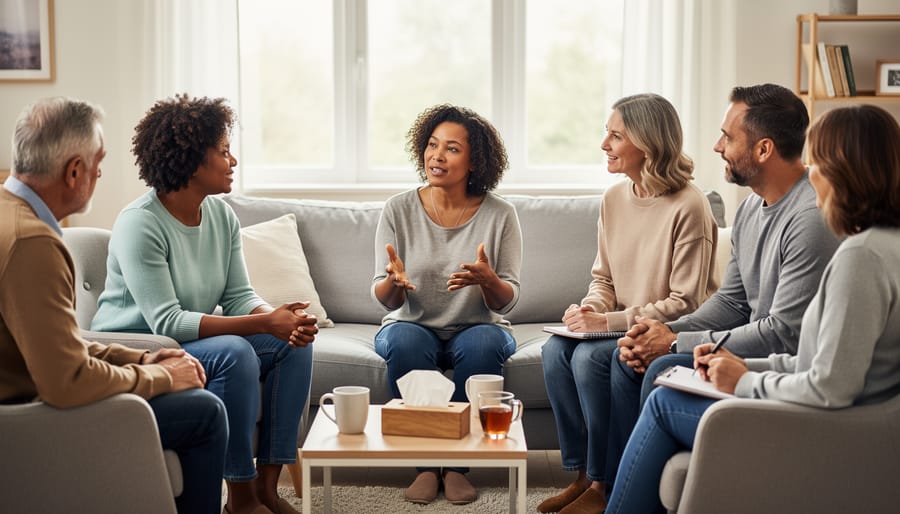
When I finally sat in a room with other stroke survivors, something shifted. They didn’t need me to explain why I cried over a dropped fork or felt rage at my own hand. They just nodded. That recognition, that silent “I’ve been there,” is what makes peer stroke support groups such a powerful force in recovery.
Your family loves you. Your friends want to help. But they haven’t lived inside this particular struggle. They haven’t felt the terror of words disappearing mid-sentence or the exhaustion of relearning how to button a shirt. In a support group, you don’t have to translate your experience. Someone’s already lived the frustration of using a walker in a world built for people who walk easily. Someone else knows the specific loneliness of looking fine on the outside while fighting invisible battles with fatigue and cognitive fog.
This shared understanding does something profound, it dissolves shame. When another survivor admits they’re still angry six months post-stroke, you realize your own anger isn’t a character flaw. When someone describes the grief of losing their pre-stroke self, you feel permission to mourn too. These connections become the strongest recovery tool many survivors didn’t know they needed, precisely because they offer validation that no well-meaning outsider can fully provide.
Learning From Those Further Along
One of the most powerful aspects of joining a support group is witnessing the journeys of people who are months or years ahead of you in their recovery. When you’re struggling to button a shirt or speak a complete sentence, meeting someone who faced identical challenges and now drives again or returned to work becomes tangible proof that progress is possible. These connections offer more than hope; they provide a roadmap.
Members further along share practical solutions you won’t find in medical pamphlets. They’ll tell you which occupational therapist truly understands stroke recovery, how they convinced their insurance company to cover necessary equipment, or the exact wording that helped family members understand their fatigue isn’t laziness. You learn adaptive techniques born from real life, like the woman who taught me to anchor bread with a damp towel while spreading peanut butter one-handed.
This lived expertise accelerates recovery through community wisdom. Seeing someone six months ahead reminds you that today’s insurmountable obstacle becomes tomorrow’s conquered challenge, while their willingness to share hard-won knowledge means you don’t navigate this path alone or reinvent solutions already discovered.
Types of Support Groups for Stroke and Heart Disease Survivors
Support groups come in many shapes and sizes, and finding the right format can make all the difference in your recovery experience. The landscape of peer support has evolved dramatically, especially since 2026 offers more accessibility options than ever before. Understanding what’s out there helps you choose something that genuinely fits your life, not just what happens to be most visible.
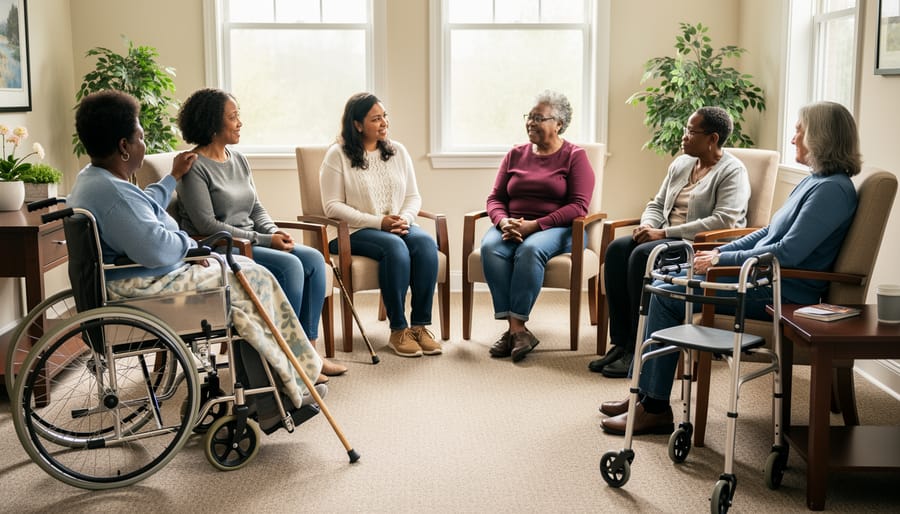
In-person groups remain the traditional gold standard for many survivors. These face-to-face meetings typically happen weekly or monthly at hospitals, community centers, or stroke rehabilitation facilities. There’s something powerful about sitting in a circle with people who truly understand your struggles, reading body language, and sharing coffee afterward. The downside? They require physical mobility and transportation, which can be challenging during early recovery or for those with lasting physical limitations.
Online communities have exploded in popularity and sophistication. These range from simple Facebook groups to dedicated forums on platforms like Life After Strokes. You can participate at 3 AM in your pajamas when insomnia strikes, or scroll through encouraging posts while waiting for a doctor’s appointment. The asynchronous nature means you’re never alone, regardless of your time zone or sleep schedule. However, text-based communication can sometimes lack the emotional depth of seeing someone’s face.
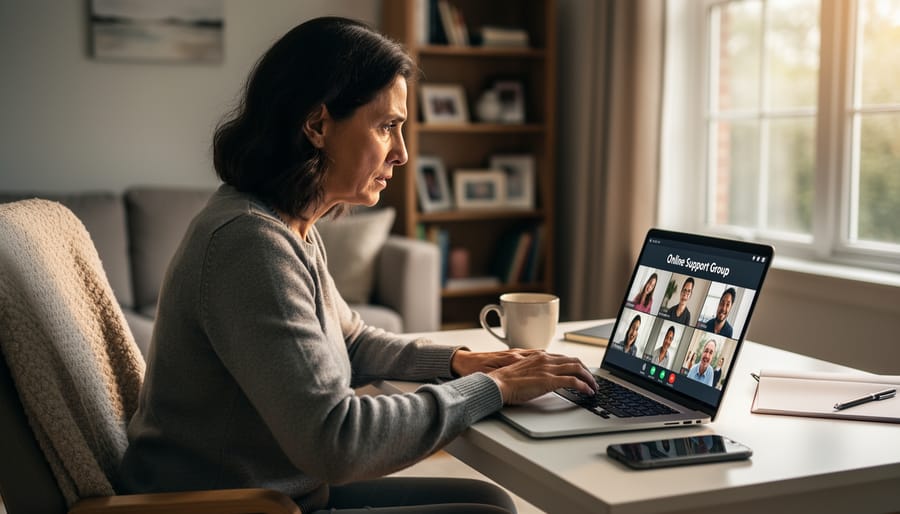
Video-based groups bridge the gap between in-person and purely online formats. Using Zoom, Google Meet, or specialized health platforms, these groups let you connect face-to-face from home. They’re particularly valuable for survivors with mobility challenges or those in rural areas without local support group options. Many find the visual connection more meaningful than text while still offering the convenience of home participation.
| Group Type | Format | Best For | Key Advantages |
|---|---|---|---|
| In-Person | Face-to-face meetings at physical locations | Those with mobility, seeking deep personal connections | Strongest emotional bonds, nonverbal communication, social routine |
| Online Communities | Forums, social media groups, message boards | Anyone with internet access, night owls, busy schedules | 24/7 access, anonymity option, large member base |
| Video Groups | Live video meetings via Zoom or similar platforms | Home-bound survivors, rural residents, those balancing caregiving | Face-to-face connection from home, geographic flexibility |
| Specialized Groups | Varies by focus (young survivors, caregivers, specific conditions) | Those with unique circumstances or specific needs | Highly relevant experiences, targeted resources, precise understanding |
Specialized groups focus on specific populations or circumstances. Young survivor groups connect people who’ve experienced stroke before age 50 and face unique challenges like career disruption, young children, or fertility concerns. Caregiver support groups serve spouses, adult children, and family members navigating the stress of caring for a loved one. Condition-specific groups might focus on hemorrhagic versus ischemic strokes, or particular complications like aphasia.
Some survivors benefit from multiple group formats simultaneously. You might attend an in-person meeting monthly for deeper connections while participating in an online community for daily encouragement. Others discover their perfect fit immediately. The key is knowing your options and being willing to experiment until something clicks.
Finding the Right Support Group for Your Journey
Finding the right group starts with knowing where to look. Your local hospital’s rehabilitation department often maintains lists of stroke and heart disease support groups, and the staff who worked with you during recovery can point you toward community-based support options. Community centers, senior centers, and faith organizations frequently host meetings. National resources like the American Stroke Association finder and state programs such as the Michigan Stroke Program directory connect you with groups in your area. Life After Strokes offers online communities specifically designed for stroke and heart disease survivors, giving you options if transportation or scheduling makes in-person attendance difficult.
Once you’ve identified a few possibilities, ask practical questions before committing. Find out how often the group meets, whether there’s a facilitator or if it’s peer-led, and what the typical size and demographics look like. Does the group focus primarily on stroke survivors, or does it include people with various cardiovascular conditions? Are caregivers welcome, or is it survivor-only? Understanding these details helps you gauge whether the environment matches your needs.
The right fit feels welcoming from the start, even if you’re nervous. You should notice people actively listening to each other rather than competing for attention, and the atmosphere should feel safe enough that members share honestly. If a group feels cliquish, dominated by one or two voices, or leaves you feeling worse rather than supported, that particular group isn’t your match. Give any group two or three sessions before deciding, because first-time jitters can cloud your judgment. But trust your gut. The right support group will feel like somewhere you belong, where your experience matters and your recovery journey is understood.
What to Expect at Your First Meeting
Walking into your first support group meeting can feel intimidating. You might worry about what to say, whether you’ll fit in, or if you’ll be forced to share your story before you’re ready. Here’s the reality: most groups are designed to make newcomers feel welcome, and nobody expects you to do anything except show up.
Most support groups follow a simple format. Meetings typically start with introductions, where each person shares their first name and perhaps a brief sentence about where they are in their recovery journey. This isn’t mandatory, and saying “I’d prefer to just listen today” is perfectly acceptable. The facilitator will then guide the discussion, which might follow a specific topic or allow members to share what’s currently on their minds.
Confidentiality is fundamental to creating a safe space. What’s shared in the group stays in the group. Most facilitators explicitly state this rule at the beginning, and it’s taken seriously. You’re free to discuss your own experiences outside the meeting, but never someone else’s story or struggles.
You control your level of participation. Some people jump right in, others sit quietly for weeks before speaking. Both approaches are fine. Simply being present and hearing others’ experiences can be valuable, even when you’re not ready to contribute verbally. Many survivors find that listening first helps them gauge the group’s dynamics and decide what they’re comfortable sharing later.
The atmosphere is usually informal and supportive rather than clinical or structured. People laugh, cry, ask questions, and offer encouragement. There’s no test, no judgment, and no pressure to have everything figured out.
Making the Most of Your Support Group Experience
Getting the most from your support group isn’t about being perfect or showing up with all the answers. It’s about showing up, period, and letting yourself both receive and give in equal measure.
Consistency matters more than intensity. Try to attend regularly, even when you’re not in crisis mode. The relationships that develop over time become the real value, and those bonds only form through repeated contact. If you miss a meeting, don’t let guilt keep you away from the next one.
Start by listening, then gradually share when you feel ready. There’s no pressure to bare your soul on day one, but opening up about your struggles gives others permission to do the same. The moment you admit you’re having a hard time, you often discover you’re not alone in that specific challenge.
Be generous with encouragement when others share victories, no matter how small they seem. Celebrating someone’s first post-stroke trip to the grocery store might feel minor until you remember your own terror at that milestone. Your “me too” or “I’m so proud of you” carries weight you might not realize.
Set boundaries around what you’re willing to discuss and respect others’ limits too. Not every session will feel productive, and that’s okay. Some days you’ll leave energized; other days you’ll simply leave having been present.
Remember that helping others accelerates your own healing. When you share a coping technique that worked for you or simply hold space for someone’s tears, you’re reinforcing your own progress and finding purpose in your experience.
Real Stories: How a Support Group Changed Everything
Sarah, 54, discovered her support group six months after her stroke when depression had made her withdraw from everyone. She attended her first meeting reluctantly, planning to leave early. Two years later, she credits that decision as the turning point in her recovery.
“The group gave me permission to be broken while showing me I wouldn’t stay that way,” she recalls. Within weeks, Sarah found herself laughing again, something her family had started to worry would never happen. The group taught her practical shortcuts for dressing with limited right-hand mobility, but more importantly, they understood her rage about losing her career without trying to fix it or minimize it.
I thought I was weak for struggling, but the group showed me I was actually fighting harder than I’d ever fought in my life.
Marcus, 42, joined an online support group specifically for younger stroke survivors after feeling completely alienated from the typical recovery experience. Most resources assumed retirement age, not a father of three with a mortgage. His group became his lifeline through the impossible conversations about career changes and explaining disability to children.
The group connected him with another survivor who’d successfully returned to construction work using adaptive techniques. That single connection, impossible to find through medical channels alone, gave Marcus a roadmap when he thought his profession was lost forever.
Elena, 67, attended a caregiver support group after her husband’s heart attack left him feeling invisible. The group validated her exhaustion and gave her strategies for respite care without guilt. More than that, they reminded her that caring for herself wasn’t selfish.
Six months in, Elena helped a newly devastated wife navigate hospital bureaucracy and find home care resources. Becoming the person who once helped her transformed Elena’s sense of purpose during the hardest year of her life.
When a Support Group Isn’t Working
Not every group will feel right, and that’s completely normal. If you’ve attended several meetings and still feel disconnected, uncomfortable, or even worse than before, it might be time to explore other options.
Red flags deserve your attention. A group where one or two people dominate every conversation leaves little space for others. Leadership matters too, facilitators should create safe, structured environments, not offer medical advice or push their own agendas. If confidentiality gets broken or members judge rather than support each other, trust yourself and look elsewhere.
Sometimes the issue is simpler: timing, location, or the group’s focus just doesn’t match your needs. Maybe you’re the youngest participant by decades, or the format feels too rigid. Perhaps the energy drains you instead of lifting you up. These mismatches don’t mean support groups don’t work, they mean this particular one isn’t your fit.
Trying a different group isn’t giving up. It’s advocating for yourself. Online communities offer different dynamics than in-person meetings. Specialized groups for young survivors, caregivers, or specific conditions might resonate better. The stroke community is diverse, and somewhere out there is a group where you’ll feel genuinely seen and supported.
One bad experience shouldn’t close the door on connection. You deserve a space where you feel safe, heard, and encouraged. Keep searching until you find it.
Your recovery doesn’t have to be a solitary journey. Finding the right support group can shift everything, how you view your progress, how you handle setbacks, and how connected you feel to a life that may look different but remains full of possibility. The stories you’ve read here aren’t exceptional; they’re what becomes possible when survivors stop going it alone and start leaning into community.
Taking that first step feels daunting. You might worry about walking into a room of strangers or sharing vulnerable moments online. But here’s what I’ve learned: everyone in that room once stood exactly where you are now. They remember the hesitation, and they’ll welcome you without judgment.
You don’t need to wait until you feel ready. Start today. Explore community resources through Life After Strokes, where you’ll find online support groups designed specifically for stroke and heart disease survivors. Connect with others who understand your challenges, celebrate your victories, and remind you that recovery isn’t just about regaining abilities, it’s about rebuilding a life worth living.
Your community is waiting. They’ve saved a spot for you, and your story matters more than you know.


